 UI/UX Design
UI/UX Design Services Built Around Clarity
We design interfaces that are calm, accessible, and easy to use - built on real user research, not visual trends that look good for one screenshot.
 Accessibility Built InResearch-Led DesignAI-Accelerated, Human-Reviewed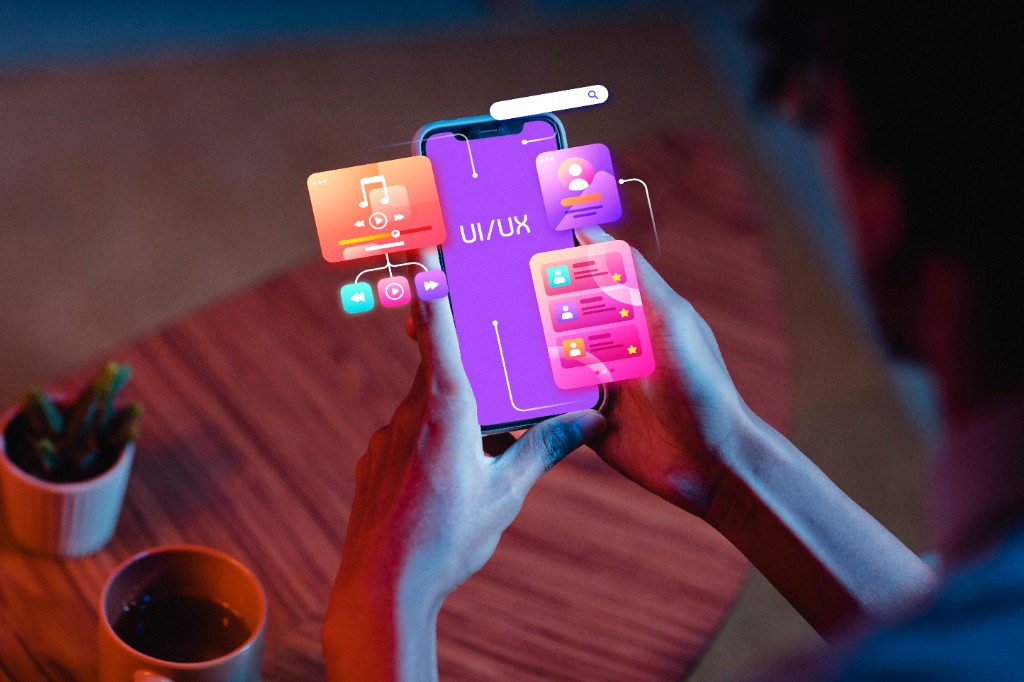
Model Efficiency
98.5%
Processing Speed
1.2ms

Service Overview
The End of Visual Theatrics
A few years of flashy motion, glassmorphism, and engagement mechanics have given way to something simpler: interfaces people can actually use without thinking too hard. In 2026, clarity is the differentiator, not decoration and accessibility has moved from a compliance checkbox to a core design principle, driven by regulation and by the fact that accessible products simply perform better for everyone.
UI/UX Design uses AI to speed up the mechanical parts of design — variants, layouts, accessibility audits while our designers focus on what AI still can't do: understanding your users, structuring information so it makes sense, and solving problems specific to your product.
Business Challenges We Solve

Interfaces That Confuse, Not Clarify
Flashy design choices that get in the way of people completing a task.

Accessibility as an Afterthought
Retrofitting accessibility after launch, which costs far more than building it in from the start.

Design That Doesn't Match Real Users
Decisions based on assumptions instead of actual user research.
Capabilities
Core Design Capabilities
From user research to a design system your team can build on.

UX Research & Usability Testing
Understand how real users actually behave, not how stakeholders assume they behave.

Information Architecture
Structure content and navigation so people find what they need without hunting for it.
UI Design & Design Systems
Consistent, reusable components across web, mobile, and every touchpoint your product has.

Accessibility-First Design
WCAG-compliant interfaces built in from day one, not audited in at the end.

Prototyping & AI-Assisted Iteration
Fast, testable prototypes using AI-assisted tools, refined through real usability testing.

Motion & Micro-Interaction Design
Purposeful motion that clarifies what just happened, not decoration for its own sake.
Why It Matters
Design That Shows Up in the Numbers
Every project is scoped around a usability or conversion outcome, not just a visual refresh.
Higher Task Completion
Clear structure and calm interfaces mean fewer people give up midway.

Wider Reach
Accessible design opens the product to users who'd otherwise be locked out.
Fewer Costly Redesigns
Getting research and structure right early avoids expensive rebuilds later.

Our Methodology
From User Research to a Design System
A structured approach that treats research and accessibility as foundational, not optional steps.
Discovery & Research
Understand your users, their real workflows, and where the current experience breaks down.
Information Architecture & Wireframes
Structure content and flows before any visual design begins.
UI Design & Prototyping
Design the interface and build interactive prototypes, using AI-assisted tools where they genuinely speed things up.
Test & Refine
Validate with real users, not just stakeholders, and refine based on what actually happens.
Tech Stack
Enterprise-Grade Tools & Frameworks
Design & Prototyping
Interface design and interactive prototypes.

AI-Assisted Design
Accelerate variants, layouts and exploration.
Accessibility Testing
WCAG checks integrated into the design workflow.
Handoff & Collaboration
Specs and component libraries for engineering.
Relevant Industries
Trusted Across Sectors
SaaS & Technology
Dashboards and product interfaces designed for clarity at scale.

Healthcare
Accessible, compliant interfaces for patient-facing and clinical tools.

E-commerce
Conversion-focused design that keeps checkout simple and frictionless.