
AI Development Insights & Engineering Perspectives
Practical guidance on artificial intelligence development, generative AI integration, and enterprise automation — from the engineers and consultants building it at Electro AI Lab.

PDF Editor Built for Speed and Privacy
How Electro AI Lab built a focused PDF editor - one toolkit for merging, editing, compressing, and organizing documents, designed around privacy.
Latest articles
AI Trends in IT Services
Explore the latest developments in artificial intelligence and how they're reshaping enterprise IT infrastructure.
 Case Study
ElectroSEO: An SEO Audit Platform
Electro AI Lab built ElectroSEO, an SEO audit platform connecting detection, prioritization, AI fixes, and tracking in one workflow.
 Blogs
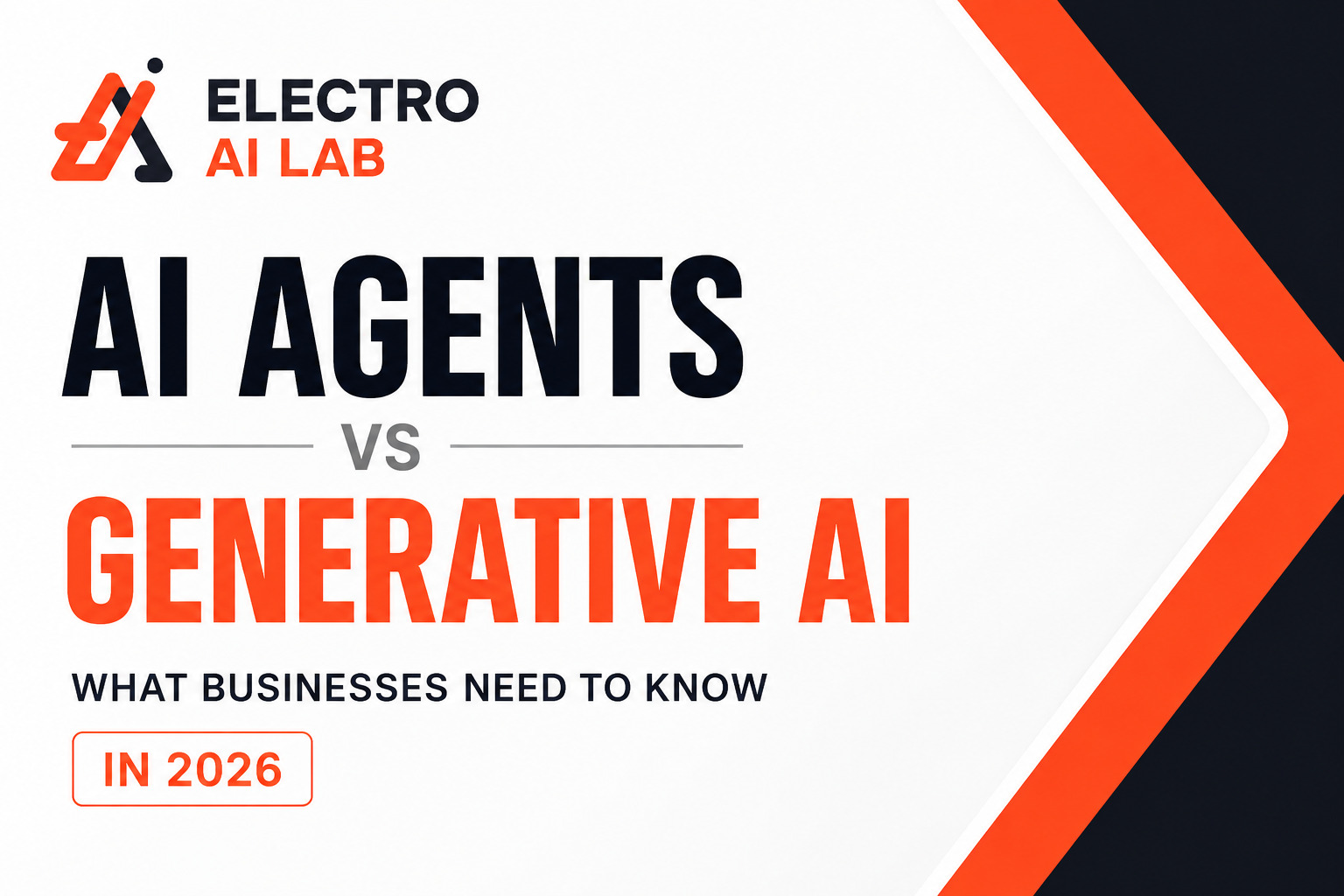
BlogsAI Agents vs Generative AI: What Businesses Need to Know in 2026
Understand the difference between AI Agents and Generative AI in 2026. Discover how autonomous workflows drive efficiency, productivity, and growt
Agentic AI Moves From Demo to Daily Operations
Why enterprises are shifting from chatbots to agents that can plan, tool-call, and complete multi-step work.
 Case Study
ElectroHMS: Hospital Information Management System
How Electro AI Lab designed ElectroHMS, an in-house hospital information management system connecting patient care, staff operations, and hospital administration.
Retrieval-Augmented Generation Becomes Table Stakes
Grounding models in your own data is no longer optional for business-critical GenAI features.
Future of AI-Driven Software Development
Discover how machine learning is revolutionizing the software development lifecycle and code quality.
On-Device AI Enters Enterprise Mobile Strategy
Edge inference on phones and tablets cuts latency and keeps sensitive data off the network.
Demand Forecasting That Stabilized Retail Inventory
A retail chain cut stockouts and overstock by aligning forecasts with promotions and regional demand.
How AI Transforms Enterprise Operations
Real-world examples of businesses achieving 40% efficiency gains through intelligent automation systems.
Fraud Detection That Cut False Positives by Half
A fintech client replaced brittle rule packs with models that flagged more fraud with fewer customer interruptions.
Predictive Maintenance for a Multi-Plant Manufacturer
Sensor data and forecasting models reduced unplanned downtime across three facilities.
Digital Twins Leave the Lab and Enter Operations
Interactive replicas of assets are moving from R&D demos into design review, training, and live monitoring.
Multimodal Interfaces for Frontline Work
Voice, vision, and gesture are making industrial software usable with gloves on and screens off.
Composable AI Platforms Beat Monolith Roadmaps
Enterprises are assembling model, retrieval, and workflow layers instead of waiting on one megasuite.
Observability Patterns for Production ML
How to monitor drift, latency, and data quality so models stay trustworthy after launch.
API Design for AI Agents That Call Your Systems
Idempotency, clear schemas, and guardrails make your APIs safe for tooling agents — not just humans.
CI/CD That Treats Models Like Deployable Artifacts
Versioned model packages, evaluation gates, and rollback paths belong in the same pipeline as application code.
Schema Contracts Between Pipelines and Features
Prevent silent training-serving skew with explicit feature contracts and validation at every hop.
Enterprise AI Adoption Playbook
A practical framework for moving AI from pilots to production with clear ownership, metrics, and governance.
Building Trusted Generative AI Systems
Architecture patterns for retrieval, evaluation, and human oversight in enterprise GenAI products.
Cloud & AI Cost Governance Guide
How FinOps practices apply to GPU spend, inference volume, and model selection without slowing delivery.
Data Foundations for Reliable Machine Learning
Pipelines, quality contracts, and governance required before models can earn operational trust.
 Blogs
BlogsWhy Every Business Needs an AI Strategy in 2026: Staying Competitive in the Digital Age
Discover why every business needs an AI strategy in 2026. Learn how Artificial Intelligence improves productivity, customer experience, decision-making, and long-term business growth.
Ready to turn ideas into products?
Let's discuss how AI and modern engineering can accelerate your next initiative.